Redefining Living is committed to transforming how individuals experience support within the familiar surroundings of their own homes. Our core mission is to empower clients to maintain their independence, feel secure, and experience joy while remaining connected to their communities. At the heart of this commitment lies our comprehensive Wellbeing Model, a framework meticulously designed to enhance the lives of those we support. This report aims to elucidate how the Wellbeing Model contributes to increased independence, enhanced security, and improved overall wellbeing, offering valuable insights for prospective clients seeking exceptional at-home support.
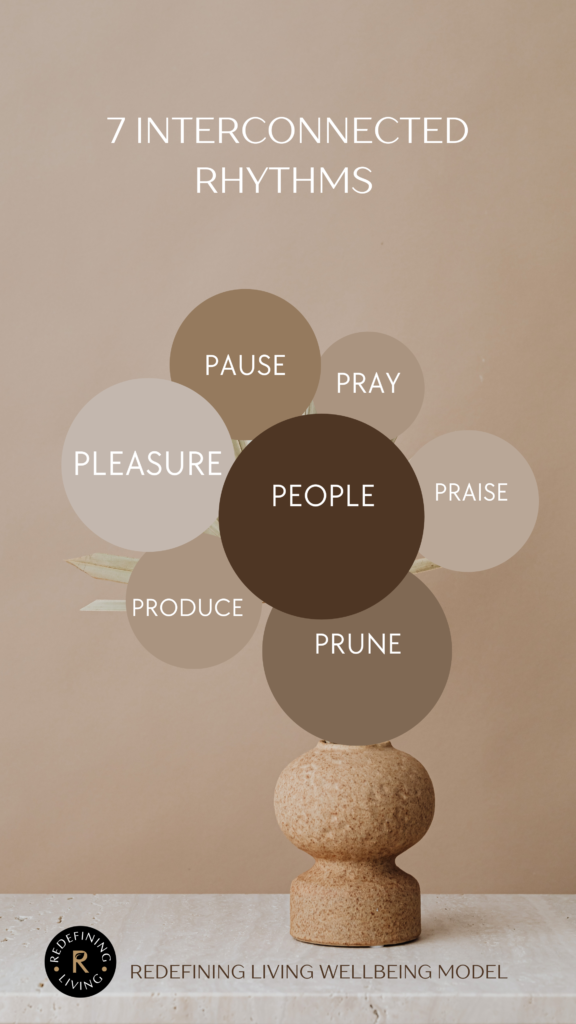
The foundation of Redefining Living’s approach is the Wellbeing Model, a carefully constructed system built upon seven interconnected principles we call “rhythms”. These rhythms are not isolated concepts but integral components working in harmony to foster holistic care, addressing an individual’s life’s physical, mental, emotional, and spiritual dimensions. The Wellbeing Model adopts a balanced approach, aiming to meet immediate needs and foster an environment where clients can flourish in every aspect of their lives.
The seven rhythms constituting the Wellbeing Model are Prune, Pause, Pray, Produce, People, Pleasure, and Praise. Each rhythm plays a unique and vital role in contributing to the overall wellbeing of our clients.
Prune – Revealing Beauty through Life and Mind Optimisation
This rhythm centres on simplification, encouraging the removal of clutter and distractions to cultivate inner peace and mental clarity. It promotes adopting habits and activities that support physical and mental health, drawing an analogy to the care of plants where pruning reveals their natural beauty. Mindfulness, regular exercise, and a healthy dietary regimen are integral to this rhythm.
Pause – Harnessing Breaks for Holistic Wellbeing
Recognising the importance of rest and rejuvenation, this rhythm emphasises the value of taking regular breaks for reflection and recharging. Like the rests in music that provide necessary silence, these pauses in daily life are crucial for reducing stress and promoting mental clarity. Scientific evidence suggests that incorporating regular breaks can lead to improvements in cognitive function, overall productivity, and enhanced mental health.
Pray – Connection with the Divine: The Scientific Bridge to Spiritual Wellbeing
This rhythm acknowledges the significant role of prayer and spiritual practices in fostering a sense of connection, purpose, and inner strength. Prayer, meditation, or other spiritual activities can provide comfort, guidance, and support for mental health and coping mechanisms. Research indicates a positive correlation between spirituality, religious practices, and improved mental wellbeing.
Produce – Cultivating Wellbeing Through Value Creation
This rhythm focuses on the human need for purpose and fulfilment, encouraging engagement in meaningful activities that align with individual values, interests, and goals. By creating value in their lives, clients experience a sense of achievement and satisfaction. Psychological studies have shown that participation in meaningful activities can positively impact mood, self-esteem, and overall life satisfaction.
People – The Essence of Supportive Networks
This rhythm underscores the critical importance of nurturing supportive relationships and social connections for emotional support, encouragement, and a sense of belonging. Strengthening social networks, seeking support from loved ones, and participating in community activities are key aspects of this rhythm. Scientific research has consistently demonstrated that strong social connections are linked to better mental and physical health outcomes, including increased resilience and longevity.
Pleasure – Allowing Yourself to Enjoy Life’s Abundance
This rhythm encourages clients to embrace simple joys and pleasures to elevate mood, reduce stress, and enhance overall wellbeing. Prioritising self-care, relaxation, and enjoyment significantly improves quality of life and resilience. Research suggests that experiencing pleasure and positive emotions can have a beneficial impact on mood and stress levels.
Praise – Self-Celebration and Communal Applause
This rhythm focuses on the importance of acknowledging and celebrating personal accomplishments and strengths and offering praise to others. This practice fosters self-esteem, gratitude, and joy. Recognising one’s successes and progress promotes resilience and motivation for continued growth. Psychological research indicates that self-affirmation and receiving praise can enhance self-confidence and overall wellbeing.

INTEGRATION
Integrating these seven interconnected rhythms into personalised care services forms the core of the Wellbeing Model, providing comprehensive support that addresses clients’ diverse needs and ultimately enhances their overall quality of life.
The Wellbeing Model is specifically designed to empower clients to maintain a high degree of independence within the comfort of their own homes. Several of the core rhythms directly contribute to fostering this self-reliance. The “Prune” rhythm, by encouraging the simplification of life and the optimisation of mindset, enables clients to make clearer decisions and manage their daily routines more effectively. A less cluttered physical and mental environment allows for greater control and reduces reliance on others for organisation and task management. Furthermore, the “Pause” rhythm, emphasising rest and reflection, enhances cognitive function and reduces stress. This improved mental clarity equips clients to handle challenges and problem-solve with greater autonomy, reducing their dependence on external support for everyday issues.
The “Produce” rhythm fosters independence by encouraging engagement in meaningful activities and pursuing personal goals. This sense of purpose and accomplishment cultivates self-reliance and reduces feelings of helplessness. When individuals are actively involved in activities they value, they are more likely to maintain their skills and interests, contributing to their ability to live independently for longer. The “People” rhythm also indirectly supports independence by fostering strong social networks. Knowing they have a supportive community gives clients the emotional fortitude to face challenges and maintain their independence with greater confidence. This safety net allows them to take initiative and manage their lives, knowing they have support available. Finally, the “Praise” rhythm reinforces independence by building self-esteem and confidence. A strong sense of self-worth encourages clients to believe in their abilities and take on tasks independently, fostering a proactive approach to self-management.
The Wellbeing Model also incorporates elements that significantly enhance the security of clients within their own homes, providing peace of mind for both the individual and their loved ones. The “Prune” rhythm, focused on decluttering and optimising the living environment, directly contributes to a safer home by reducing potential trip hazards and creating more accessible spaces. This minimises the risk of falls and accidents, enhancing the client’s physical security. The “Pause” rhythm promotes reduced stress and improved mental clarity and contributes to a safer environment. A calm and focused mind is more likely to be aware of its surroundings and make sound judgments, lowering the risk of accidents or poor decision-making that could compromise security.
The “People” rhythm provides an additional layer of security by establishing and maintaining supportive networks. These connections can provide regular check-ins and identify potential safety concerns, acting as an informal monitoring system. Friends, family, and community members can notice changes in a client’s wellbeing or home environment that might indicate a safety issue, allowing for timely intervention. While not explicitly detailed within the provided rhythm descriptions, the initial webpage snippet mentions the use of technology for proactive health and wellbeing monitoring. This technological integration complements the Wellbeing Model, providing an additional layer of security through the early detection of potential health issues that could impact a client’s safety and independence. Proactive health monitoring allows for timely intervention, potentially preventing more serious situations that compromise a client’s security and overall wellbeing.
Beyond independence and security, the Wellbeing Model holistically supports and improves clients’ wellbeing by addressing the interconnected dimensions of a fulfilling life. The “Prune” rhythm, focusing on healthy eating and exercise, directly contributes to improved physical health. Combined with proactive health monitoring (as suggested by the webpage snippet), this rhythm promotes preventative measures and healthy lifestyles to enhance clients’ physical wellbeing and longevity.
The “Pause” rhythm directly supports mental and emotional wellbeing by encouraging stress reduction and promoting mental clarity. Similarly, the “Pray” rhythm addresses spiritual wellbeing by fostering a sense of connection and purpose, providing comfort and strengthening coping mechanisms. The “People” rhythm is central to social wellbeing, fostering a sense of belonging and connection through supportive networks and community engagement. This combats isolation and loneliness, contributing to a greater overall wellbeing.
The “Pleasure” rhythm acknowledges the importance of joy and relaxation for emotional health, encouraging clients to engage in enjoyable activities, thereby reducing stress and improving mood. Finally, the “Praise” rhythm contributes to emotional and psychological wellbeing by fostering self-esteem, gratitude, and a positive self-perception. This rhythm promotes resilience and a positive outlook on life by encouraging self-celebration and the recognition of accomplishments. The “Produce” rhythm enhances intellectual and purposeful wellbeing by encouraging engagement in meaningful activities and pursuits that provide a sense of value and achievement, leading to greater life satisfaction.
Discover Enhanced Living with Redefining Living’s Wellbeing Model
At Redefining Living, we’re dedicated to transforming your experience of support at home. Our unique Wellbeing Model, built upon seven core principles we call ‘rhythms’, is designed to empower you to live more independently, securely, and with greater wellbeing in the comfort of your own home.
Our Wellbeing Model focuses on nurturing all aspects of your life – from simplifying your environment and fostering mental clarity (‘Prune’ and ‘Pause’) to nurturing your spirit (‘Pray’), encouraging purposeful activity (‘Produce’), and strengthening your connections with loved ones (‘People’). We also believe in enjoying life’s simple pleasures (‘Pleasure’) and celebrating your achievements (‘Praise’).
Embracing these rhythms help you maintain greater control over your daily life, ensuring you feel more independent and confident at home. Our approach also contributes to a safer and more secure environment, providing peace of mind for you and your family. Ultimately, the Wellbeing Model is about enhancing your overall wellbeing – your physical, mental, emotional, and spiritual health – so you can live a more fulfilling and joyful life, for longer, in the place you cherish most.
In conclusion, Redefining Living’s Wellbeing Model offers a comprehensive and thoughtful approach to at-home support. The model actively enhances clients’ independence by fostering self-management and cognitive clarity by integrating the seven interconnected rhythms of Prune, Pause, Pray, Produce, People, Pleasure, and Praise. It strengthens security by promoting a safer living environment and encouraging supportive networks. Most importantly, the Wellbeing Model significantly improves overall wellbeing by addressing each individual’s physical, mental, emotional, spiritual, social, and intellectual needs. This holistic approach ensures prospective clients can look forward to a more fulfilling, secure, and independent life within their homes’ familiar and comforting surroundings.
Table 1: The Seven Rhythms of the Wellbeing Model and their Benefits
| Rhythm | Description | Key Benefits of Independence | Key Benefits for Security | Key Benefits for Wellbeing |
| Prune | Simplifying life, optimising mindset through decluttering, mindfulness, exercise, and healthy eating. | Improved decision-making, better self-management, and enhanced control over daily routines. | Reduced trip hazards, safer home environment. | Improved physical and mental health, inner peace, and clarity. |
| Pause | Emphasising rest, reflection, and recharging for balance and mindfulness. | Improved cognitive function, better problem-solving, and reduced reliance on others for simple issues. | Increased awareness of surroundings and reduced risk of accidents due to improved mental clarity. | Reduced stress, enhanced mental clarity, improved overall mental health. |
| Pray | Fostering connection and purpose through prayer and spiritual practices. | Increased inner strength and guidance lead to greater self-reliance when facing challenges. | May provide a sense of comfort and security through faith. | Enhanced spiritual wellbeing, improved mental health and coping mechanisms. |
| Produce | Finding fulfilment through meaningful activities aligned with values and goals. | Sense of purpose and accomplishment, fostering self-reliance and continued engagement in life. | It may contribute to a more structured and predictable routine, indirectly enhancing security. | Improved mood, self-esteem, overall life satisfaction, and sense of purpose. |
| People | Nurturing supportive relationships and social connections for emotional support and belonging. | Provides emotional support and encouragement, empowering clients to face challenges and confidently maintain independence. | Acts as an informal monitoring system, providing regular check-ins and identifying potential safety concerns. | Improved mental and physical health outcomes, increased resilience, reduced feelings of isolation, and sense of belonging. |
| Pleasure | Encouraging indulgence in life’s simple joys and prioritising self-care and relaxation. | It may contribute to a more positive and engaged outlook, indirectly supporting proactive management of one’s life. | Reduced stress and improved mood may lead to better awareness and decision-making regarding safety. | Elevated mood, reduced stress, enhanced overall wellbeing, improved quality of life and resilience. |
| Praise | Acknowledging and celebrating one’s accomplishments and strengths fosters self-esteem and gratitude. | Builds self-esteem and confidence, encouraging clients to take initiative and remain independent. | May foster a more positive and engaged approach to self-care and safety awareness. |
Take our wellbeing assessment here